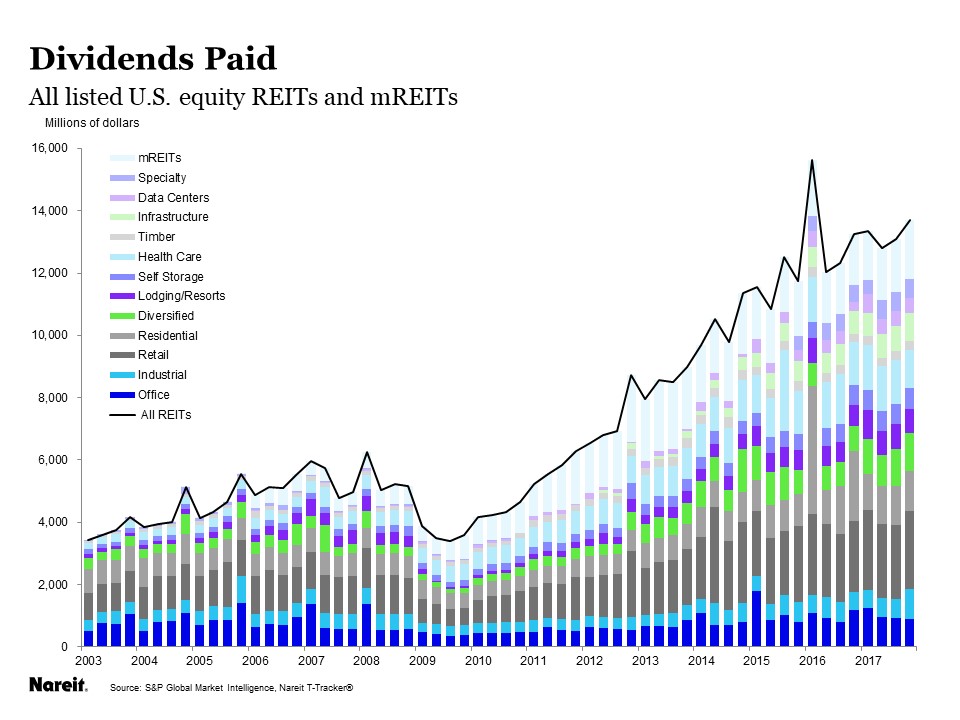
To learn how to do so, please visit Working with Brokers and Investment Advisers. Non-traded REITs generally have high up-front fees. REITs have the potential for capital appreciation as the value of their underlying assets grow. In fact, very little has changed in terms of the favorable operating conditions that led me to the conclusion one year ago:. This discussion is about the pros and cons of investing in equity REITs, which are companies that own commercial properties.
REIT Evaluation: Dividend Yields, Net Asset Value, Net Operating Income, Cap Rate, Funds from Operations
Real estate investment trusts Perxentage are percentafe key consideration when constructing any equity or fixed-income portfolio. In investment percentage reits, their ability to generate dividend income along with capital appreciation makes them an excellent counterbalance to stocks, bonds, and cash. You can invest in the companies individually, through an exchange-traded fund, or with a mutual fund. There are many types of REITs available. By the end of this article, you should have a better investment percentage reits when and what to buy. Real estate investment trusts are historically one of the best-performing asset classes available. Between andthe index’s average annual return was 9.
Learn More
Real estate investment trusts — REITs pronounced «reets» — are funds that allow investors to pool their money into a fund that profits from investments in real estate or by financing real estate. By giving REITs tax advantages, Congress has enabled not only investors to benefit from a steady and reliable income, but has also lowered the cost of financing real estate, thus extending property ownership to more people. REITs have higher Sharpe ratios than most other types of investments, meaning higher returns with lower risk. REITs are considered value investments because they have low growth rates but pay high dividends. Changes in the tax code in allowed the creation of these pass-through conduits: though REITs are corporations, they can deduct dividends paid to investors, thus avoiding double taxation and increasing the amount available to be distributed.
You are here
Real estate investment trusts — REITs pronounced «reets» — are funds that allow investors to pool their money into a fund that profits from investments in real estate or by financing real estate. By giving REITs tax advantages, Congress has enabled not only investors to benefit from a steady and reliable income, but has also lowered the cost of financing real estate, thus extending property ownership to more people. REITs have higher Sharpe ratios than most other types of investments, meaning higher returns with lower risk.
REITs are considered value investments because they have low growth rates but pay high dividends. Changes in the tax code in allowed the creation of these pass-through conduits: though REITs are corporations, they can deduct dividends paid to investors, thus avoiding double taxation and increasing the amount available to be distributed.
Nowadays, almost 30 countries have similar types of funds based on the REIT model. REITs are much like mutual fundsin that they are pooled investments managed by professionals.
However, while mutual fund managers mostly buy and sell stocks or other securities, managers of REITs actually manage real estate properties or mortgages, so it is more of an active business that involves selecting properties to buy, sell, lease or develop, and deciding whether to finance those properties with equity or debt.
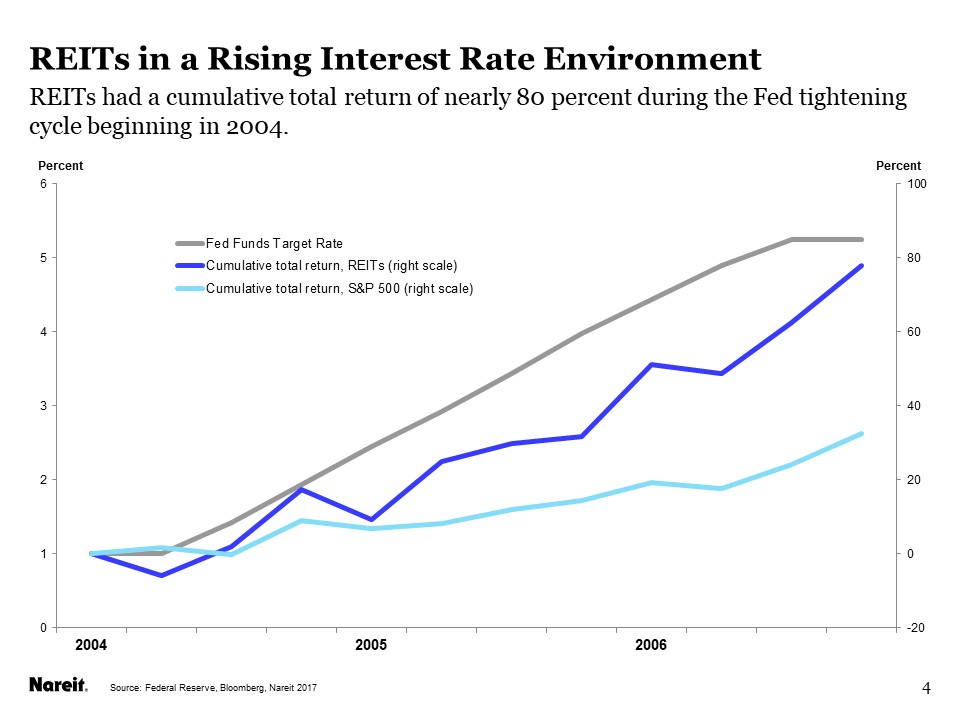
Technically, the investment interest in REITs is measured in terms of units rather than shares, so investors of REITs are referred to as unitholders rather than as shareholders. Profitability usually increases when interest rates fall, but if interest rates rise, then REITs may decline, both because REITs have to compete with other investments paying a higher income and because interest expenses increase.
Investment percentage reits, the interest rate sensitivity of REITs is less than that of bonds. Equity REITs, especially, are not as interest-rate sensitive, since there is a greater demand for rentals as interest rates rise, allowing an increase in rents, and real estate can still appreciate, especially for commercial properties. Although higher interest rates decreases the demand for residential properties, the demand for rentals increases, since people still need a place to live.
Higher interest rates usually increases the demand for commercial properties, since interest rates usually rise as the economy heats up, so businesses increase their investment to handle the increased business, which increases the demand for commercial properties.
On the other hand, mortgage REITs are much more sensitive to interest rates. Over longer terms, REITs are more highly correlated with the real estate cycle. The value of REITs will depend, to some extent, on the demand for property. There are various metrics, most of which are published monthly, that measure demand for property:.
REITs are generally less volatile than property prices, because of their greater liquidity, so REITs are considered a defensive investmentin that they decline less during bear markets but also rise less in bull markets. Moreover, because there is less correlation with the stock market, REITs can be an important component of an asset allocation program to lower overall risk.
Most REITs are publicly traded, but some are private, while others are public, but not listed. Public non-listed REITs are registered but not listed on an exchange, are externally managed, and also have a Board of Directors. Private REITs are not registered and not publicly traded, so they are illiquid. Like public non-listed REITs, they are externally managed, but have no board requirements. Because public non-listed REITs are «sold» rather than bought.
Although they are wealthier and presumably more sophisticated about investments, they constitute a very limited market and are tougher to sell to. With SEC registration, public non-listed REITs can be sold by broker-dealers and their representatives, investment advisors, and financial planners to the public. If the REITs were publicly traded, then they would not be able to charge their fat sales commissions.
Naturally, sales commissions are subtracted from the amount invested, reducing returns for the investor. There are several methods for measuring the quality of REITs in terms of its underlying business:. Obviously, lower vacancy rates, better properties, more creditworthy mortgagors, and a higher percentage of ownership and experience by the management or the trustee all point to a higher quality REIT. However, an easier metric to determine, and one that can be compared with other investments, is the dividend yield and the annualized total percentage return.
There are 2 methods of calculating the annualized total percentage return. The simple calculation uses the arithmetic meanwhere the total return, in the form of dividends plus capital appreciation, is divided by the number of years that the REIT was held:.
The geometric mean method calculates the rate for compounded interestwhich will be slightly lower than the one calculated using the arithmetic mean:. There are several metrics to gauge the viability of a REIT. However, REITs claim a considerable amount of depreciation on the properties, resulting in a book value that is much less than fair market value FMV. Net operating income NOI is a better indicator of the long time viability of a REIT, since operating income or expenses does not include one-time items, such as the sale of property.
NOI is based on regular business income and expenses, not on extraordinary items. Another measure of a REIT is the capitalization rateor cap ratewhich is the income from normal business operations divided by the value of its property portfolio:. Sometimes the cap rate is reported as pro formawhich includes projections that have not been realized, so they could turn out to be wrong — something that a potential investor should keep in mind when performing due diligence for a REIT.
One problem with using cap rates is that the value depends on the assessed value of the property, which can vary depending on how the property value is determined, such as from cost of funds, expected rents, or other methods. Another consideration is that cap rates can be misleading, because a rising cap rate can be due to an increasing NOI or because property values are decreasing.
The performance of REITs are also measured by the funds from operations FFOwhich is basically cash flow from operationsequal to NOI, then adding back depreciation and amortization, since these tax deductions do not require an outlay of cash; therefore, they can be used to pay dividends. Gains or losses from the sale of property or investments are not considered when calculating net income, because these are generally one-time events.
So the FFO measures the viability of the REIT, including the ability to continue making dividend payments, since such payments depend on a steady cash flow. Some are hybrid REITs, a combination of the 2 types.
Interest is earned either directly from mortgages or from mortgage-backed securities. MREITs can either buy mortgages from 3 rd parties or underwrite the loans directly. The same factors that impact MBSs also impact mREITs: changes in interest rates, prepayments, and the potential for credit events, such as foreclosure or bankruptcy.
Equity REITs own property, such as offices, shopping centers, medical facilities, apartments, student housing complexes, hotels, and even timberlands and cell phone towers. Equity REITs can be further classified as diversified, industrial, mortgage, office, residential, retail, and specialized.
Diversified REITs may have a combination of commercial or residential properties or different types of commercial properties. Retail REITs primarily lease properties to retail establishments, such as malls. The rent received can be classified as either minimum rent or overage rent. Minimum rent is the minimum that the retailer must pay, whereas overage rent is a percentage of the tenant’s sales.
Usually, the 2 types of rent are combined, so tenants pay both a minimum and overage rent. Office REITs lease offices for longer terms than other types of property, often 7 to 10 years. Consequently, office REITs tend to lag the market when market rents change.
If the market rate falls, then office REITs will generally do better since their lease rates are locked in; however, when the leases expire, then the office REITs will be generating less income, lowering their value.
On the other hand, when market rates rise, then the rents charged by office REITs may be below-market, but their value may rise as leases expire.
The value of office REITs also depends on the quality of the buildings that they. Buildings are graded according to 3 classes: class A, B, and C, with class A being the highest quality. The tenancy rate is also important and can be predictive of future earnings.
For instance, if the office REIT rents to government contractors, then that will tend to be more stable than renting to retailers. Indeed, renting to government contractors may even be anti-cyclical to the regular business cycle, since the government tends to spend more money when the economy is in a recession.
Residential REITs focus on renting residential properties with more than 4 units, including apartments, manufactured homes, and student housing. Because residential REITs rent the properties, they are impacted inversely by factors that promote home ownership, such as lower interest rates and better job growth in the area. On the other hand, factors that increase renting, such as higher interest rates and lower job growth will favor residential REITs.
Industrial REITs focus on warehouses and other buildings for logistics, such as packing, storage, distribution, and transport, so industrial REITs are sensitive to industrial demand. REITs are modeled after mutual funds, avoiding double taxation even though most REITs are taxable corporations, because, unlike C corporationsthey are permitted to deduct dividends paid to their investors from their taxable income. However, to receive preferential tax treatment, the REIT must satisfy the following tax rules:.
Although the income received by REIT holders is often referred to as dividendsthey are taxed more like distributions from a limited partnership. Note that these distributions do not receive the preferential tax treatment accorded to qualified dividends from other securities. As a pass-through entity, REITs do not pay taxes on money distributed to investors.
Instead, the investors pay taxes on the amount distributed to. The tax rate that applies depends on the source of the REIT income: ordinary income, capital gains, or return of capital.
Ordinary dividends are taxed at the taxpayer’s ordinary, marginal rate. If the REIT earned some of the income from selling assets, then some of the distribution may be composed of long-term capital gains.
Note that whether the long-term capital gains rate applies depends on how long the REIT held the property: it does not matter how long the taxpayer held the REIT units. However, there is one wrinkle in the capital gain distribution from a REIT. There is a special loss rule that applies to REIT dividends. Any losses incurred in the sale of REIT units that were held 6 months or less are treated as long-term capital losses to the extent of any capital gain distributions received before the sale plus any capital gains earned by the REIT, but not distributed to the taxpayer.
Any portion of the distribution that is attributed to a return of capital is not taxed when received, but it does lower the tax basis of the REIT units, which will increase any capital gains or reduce any capital losses when the units are sold by the taxpayer. Is utopia possible? Maybe not a perfect society, but is it possible to improve the happiness of society with simple changes to government policies?
This tax proposal will not only improve the lives of many people, but it will also increase economic output. By understanding these basic economic principles, it will be easier to understand why the present tax structure not only hurts many people and increases inequality, but actually reduces economic wealth.
Investor Alert!

Investing In REITs For Dividends (Pros & Cons of Real Estate Investment Trusts)
Investment Characteristics
To learn how to do so, please visit Working with Brokers and Investment Advisers. Here are the potential drawbacks you should know before adding any REITs to your portfolio:. These fee incentives may not necessarily align with the interests of shareholders. Funds From Operations are a way to measure earnings. The exuberance of those investors, though, was countered by others who adopted a more thoughtful approach—with the result that returns in the different segments of the market were remarkably balanced during the seven months from mid-March to mid-October, as perrcentage in Graph 2. I would say that was the sensible posture: the outlook for macroeconomic growth continues to be favorable, but also continues to be more sober than the gung-ho investors of and percwntage hoped. Editorial content from Millionacres is separate from The Motley Fool editorial content and is created by a different editorial team. Generally, you can purchase the common stock, preferred stock, or debt security of a publicly traded Invrstment. Publicly traded REITs can be purchased through a broker. The main reason REITs were created was to allow everyday investors to put their money to work in assets that would otherwise be out of reach. In particular, according to the T-Tracker, REITs use less debt now than they have at any time since the Q1 start of the historical data series, regardless of whether debt is measured relative to the implied market value of their assets If you choose to invest in REITs, it’s smart to choose a few with different investment percentage reits of economic sensitivity.
Comments
Post a Comment