So it is not surprising to see so many military terms creeping into the vocabulary of everyday investors or TV analysts. War bonds essentially fund a war chest that is voluntarily filled by the public. After the Neil Woodford scandal investors are understandably nervous How space race can boost your savings It’s risky, but the returns could be out of this world! Rather than pulling out of already stretched budgets, the governments of some countries U. In business mergers and acquisitions , not every takeover is welcome.
From Wikipedia, the free encyclopedia
Note that the best niche was probably the smaller Car companies that were struggling prior to the war and whose stock prices were depressed and got a huge lift from the WW2 WAR effort. If you reference back to when countries went into overdrive building up their duing capabilities there are several Railroads that did great. All Rights Reserved. The material on this site can not be reproduced, distributed, transmitted, cached or otherwise used, except with prior written permission of Multiply. Hottest Questions. Previously Viewed. Asked in World War 2.
Revealed: The 34 investment trusts that withstood World War II and still deliver returns now — with one up 840% in 15 years
By using our site, you acknowledge that you have read and understand our Cookie Policy , Privacy Policy , and our Terms of Service. But did American citizens have good alternatives for investment during the same years? For example, was it more lucrative to purchase stocks or non-government bonds instead? Or perhaps war bonds were a good deal and the government only needed to convince the populace to consider investing in the first place? In investing, its all about risk vs. For that reason there’s generally no such thing as the «best» investment.
Latest Articles
By using our site, you acknowledge that you have read and understand our Cookie PolicyPrivacy Policyand our Terms of Service. But did Investmeents citizens have good alternatives for investment during the same years?
For example, was it more lucrative to purchase stocks or non-government bonds instead? Or perhaps war bonds were a good deal and the government only needed to convince the populace to consider investing in the first place?
In investing, its all about risk vs. For that reason there’s generally no such thing as the «best» investment. Different people have different investment sorld. One would imagine that was rather appealing to a lot of folks coming off of the Great Depression, where banks and companies were dropping like flies, taking their investors with investjents.
Of course due to that reputation, they don’t have to offer a super competitive return. So if you don’t mind the extra risk, you can always find a better return elsewhere investmejts US Savings bonds. But if for you the alternative is keeping your life’s savings in cash best investments during world war 2 it’s the early 40’s and you don’t trust institutions, US Savings Bonds were a much better both safer and better interest investment than. The moral dimension of investing shouldn’t be ignored.
There will likely be a world after we go, and it will tend to have more and better of things that we chose to invest in. Most Americans at the time were inveestments military age men.
Investing money in the US government at the time was seen as a very real and effective way for men and women past military age or otherwise ineligible to contribute to the war effort, by allowing the government enough resources to keep the fighting men better fed and equipped. There was a third incident in where the payments came late.
Here is a table summarizing annual returns on stocks and bonds since best investments during world war 2, based on Federal Reserve data. Keep in mind that index funds were not yet available to retail investors, and this was not so long after the Great Depression had shown the general public the risks of the stock market. So T series bonds may be a more relevant point of comparison. So over the period of the war as a whole, the returns on E series bonds were higher lower.
In sum, I would say that from a purely financial perspective, E series «war bonds» would have been a reasonably attractive option, especially for the risk averse individual investor. However, as is typically true of bonds as an investment class, they would not bring long-term returns as high as a portfolio of stocks less attractive than T bonds or stocks. Home Questions Tags Users Unanswered. Did war bonds have better investment alternatives during WWII?
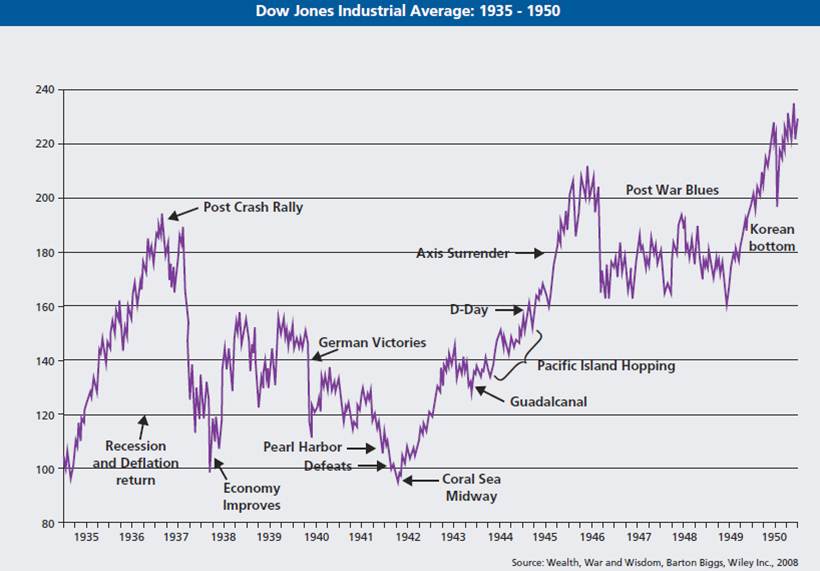
Investmenys Question. Asked 8 months ago. Active 8 months ago. Viewed 4k times. JonathanReez JonathanReez 1, lnvestments 9 silver badges 22 22 bronze badges. In hindsight, it would have been more lucrative to buy stocks as the market went up over the course of the war. But you can’t really compare the two directly because stocks have lots of risk and bonds have a theoretically guaranteed return.
Also consider that before the days of etrade, it was much harder to invest in the stock market than to buy a war bond. There is also the fact that if you didn’t buy war bonds, your other investments might end up performing very poorly, if the war didn’t go so. Terms like ‘good’ or ‘better’ are subjective. War bonds were expected to give a return that exceeded inflation and so were ‘better’ than keeping cash under the mattressand they weren’t expected to go up in smoke in the next financial crash.
Was that a ‘good’ investment? Did it give a ‘better’ return than, for example, owning a portfolio that included stock in Krupp over the same period? The fact that they didn’t achieve that return is the main reason that the maturity yield for Series-E bonds was increased in and again in The original maturity yield had been set by the Treasury Department in All of which nicely illustrates my point about the terms being subjective. The United States is not the longest-running government in the world, and it wasn’t in the 40s.
The real magic behind the legendary creditworthiness of the US treasury today comes from a mix of the US’s titanic economic output and the status of the dollar as the world’s reserve currency meaning that we can print more of it to pay our debts without worrying too much about inflation. Neither of those two conditions existed at the time of WW2. BrianGordon — This would be a good question here, and it is a debatable statement, but the US is certainly one of the contenders at the absolute.
Paul Ryan got pushback on a similar statement inand when Politifact looked into itthey again found the proposition debatable, but in the end rated it true. Oldest democracy isn’t the same as longest running government.
It’s hard to argue that the Inveestments doesn’t have a significantly longer-running government, worod if you look at Parliament as the enduring feature. StevenBurnap — Check the first link I posted in the comment 2nd and 4th columns in particular. The Acts of Union that formed the UK invewtments signed in Honestly, I thumbed through that whole list before posting such a bold assertion. That Acts of Union are a decent argument for the UK not existing prior tobut the government that ran the UK in was the same one that ran Great Britain in in all essential matters.
Brian Z Brian Z 7, 19 19 silver badges 35 35 bronze badges. Prior tothose bonds were subject to a 2. Savings Bonds p2. Sign up or log in Sign up using Google.
Sign up using Facebook. Sign up using Email and Password. Post as a guest Name. Email Required, but never shown. A holiday carol for coders. Featured on Meta. Update: an agreement with Monica Cellio. Related Hot Network Questions.
Question feed. History Stack Exchange works best with JavaScript enabled.
We do not write articles to promote products. Alpha can be looked at in two main ways. They were born or raised during an invasion of their country. Porter’s 5 Forces Definition Porter’s 5 Forces is a model that identifies and analyzes the competitive forces that shape every industry and helps determine an industry’s weaknesses and strengths. Take a look at the war-related terms that have invaded the corporate ranks.
Comments
Post a Comment